Root Canal Therapy in Palatine, IL
When infection or deep decay sets in, a root canal is one of the most effective ways to stop the pain and save the natural tooth. More than 15 million root canals are performed in the United States every year, making it one of the most common and most successful procedures in dentistry. At Regency Dental Care, gentle techniques and modern technology keep root canal therapy comfortable and stress-free.
What it is
A procedure that clears infected or damaged pulp, the nerve tissue inside a tooth, then seals the tooth to keep further infection out.
Who it's for
Patients dealing with deep decay, cracked teeth, repeated work on the same tooth, or symptoms such as severe pain, swelling, or sensitivity.
How we help
Digital imaging for a precise diagnosis, gentle treatment under local anesthesia, and a crown to restore long-lasting strength.
Have a severe toothache or lingering sensitivity? Call us immediately for emergency evaluation.
Why You Might Need a Root Canal
Every tooth holds a soft inner tissue called the pulp, home to its nerves and blood vessels. Once the outside of a tooth is breached by a deep cavity, crack, or injury, bacteria can work their way down to the pulp and set off an infection.
Left untreated, that infection can spread and form a painful abscess at the root tip, eventually costing you the tooth. A root canal takes out the infected tissue, cleans the inside of the tooth, and seals it, preserving the tooth's structure while removing the source of your pain.

Signs You May Need a Root Canal
Infected Tooth Symptoms
- Lingering sensitivity to hot or cold
- A severe or throbbing toothache
- Pain that flares when you bite or chew
- Swollen gums, face, or jaw
- A tooth that has darkened or discolored
- A small, pimple-like bump on the gums by the tooth
- At times no symptoms at all, showing up only on an X-ray
Benefits of Saving Your Tooth
- Efficient chewing: Hold on to your natural bite force and function
- Normal appearance: Once restored, the tooth looks and feels natural
- Protects neighbors: Stops adjacent teeth from drifting or taking on extra stress
- Prevents bone loss: With the root left in place, your jawbone stays intact
- Cost-effective: Saving a tooth usually costs less than pulling and replacing it
When to call us: A severe toothache, swelling, drawn-out temperature sensitivity, or pain that wakes you at night. Each can signal an infection that needs prompt attention.
Seek emergency care if facial swelling reaches the eye or neck, if breathing or swallowing becomes difficult, or if you run a high fever.
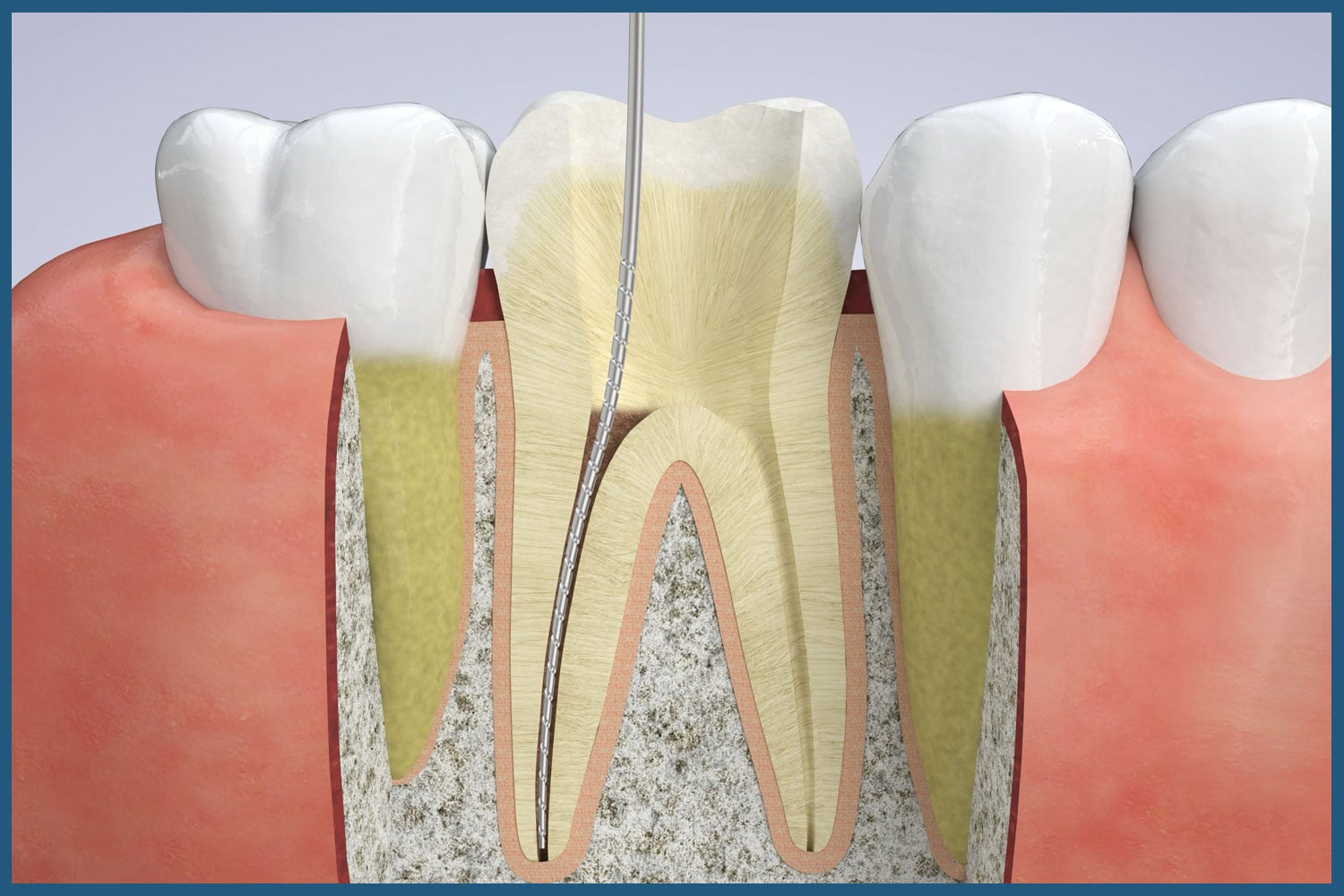
Stages of Root Canal Therapy
The Procedure
- Numbing: For your comfort, the tooth is fully numbed, then a small opening through the crown reaches the inner chamber.
- Cleaning: Out comes the infected pulp, and every root canal is carefully cleaned, shaped, and disinfected, sometimes with medication placed inside.
- Sealing: A rubber-like, biocompatible material fills the canals to seal them off and guard against reinfection.
- Restoring: A dental filling, and in most cases a dental crown, rebuilds the tooth to strengthen and protect it for years to come.
Nervous about root canal pain? Most patients say it feels no different than getting a filling.
What to Expect at Your Visit
Visit Steps
- Diagnosis: We look over your tooth and X-rays to confirm that root canal therapy is needed
- Treatment plan: Before anything begins, Dr. Liana Tremmel walks you through the procedure, timeline, and cost
- Procedure: A single visit of 60–90 minutes wraps up most root canals
- Follow-up: A crown appointment usually follows 2–3 weeks later to permanently restore the tooth
Helpful Tips
- If you've been directed to, take any prescribed antibiotics before your appointment
- Have a good meal ahead of time, as your mouth may stay numb for a few hours afterward
- Expect mild tenderness for 2–3 days (manageable with over-the-counter pain relief)
- Hold off chewing on the treated tooth until your permanent crown is in place
- Since treatment removes the tooth's nerve, it no longer senses temperature, though it works normally in every other way
Frequently Asked Questions
Don't let tooth pain run your life. Root canal therapy can save your tooth and bring lasting relief.