TMJ/TMD Treatments in Palatine, IL
A temporomandibular joint disorder (TMD) can announce itself through jaw pain, clicking, headaches, and trouble chewing. To ease that pain and bring jaw function back to normal, Dr. Liana Tremmel offers a range of conservative, non-surgical treatments at Regency Dental Care, from custom night guards and splint therapy to therapeutic injections.
What it is
TMD affects the temporomandibular joint (TMJ), the hinge linking your jaw to your skull. The result can be pain, clicking, locking, or limited jaw movement.
Who it's for
Anyone coping with jaw pain or clicking, chronic headaches or migraines, teeth grinding (bruxism), facial tension, or a mouth that won't open fully.
How we help
A thorough clinical evaluation, digital imaging, custom oral appliances, therapeutic Botox injections, and bite adjustment, every one a conservative, non-surgical approach.
Is jaw pain or clicking getting in the way of daily life? A proper diagnosis is the first step toward lasting relief.
Signs You May Have TMD
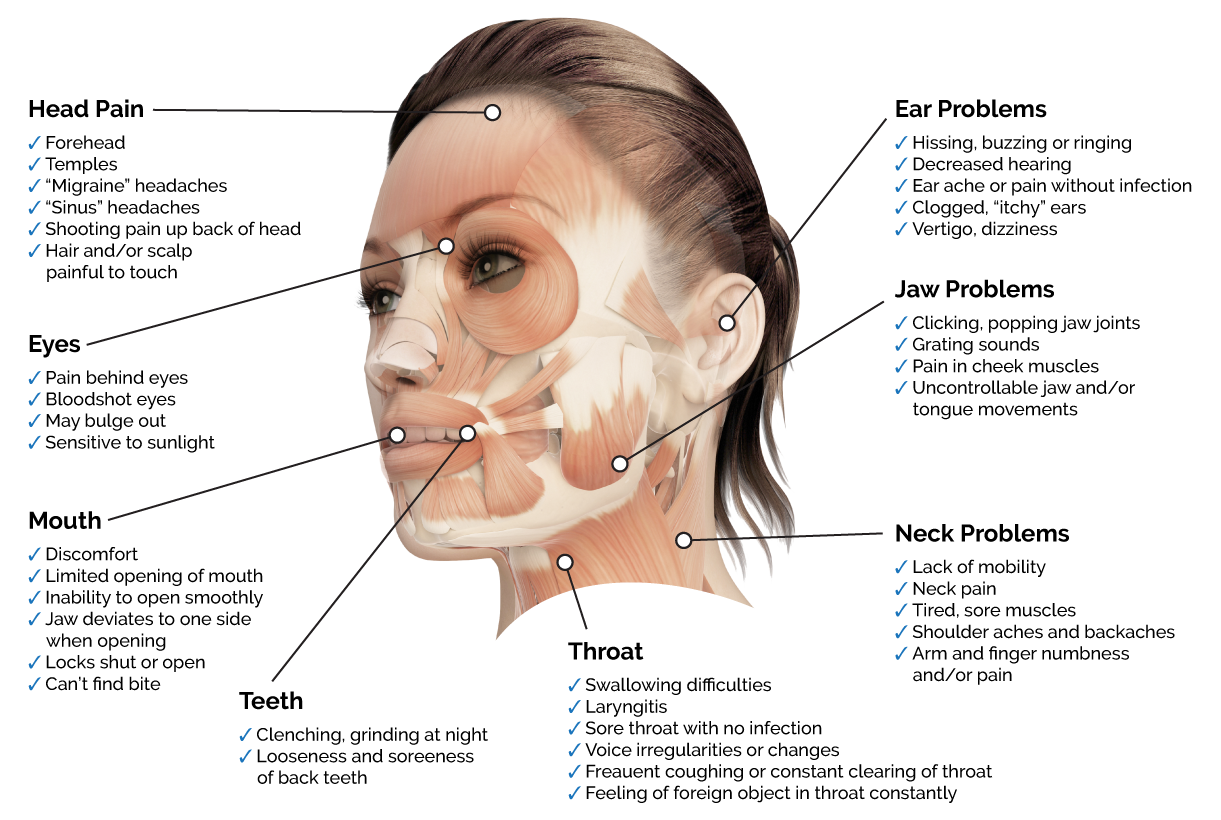
Common Symptoms
- Pain or tenderness across the jaw, face, or around the ear
- Clicking, popping, or grinding sounds as you open or close your mouth
- A jaw that locks open or locks shut
- Chewing that feels difficult or uncomfortable
- Recurring headaches or migraines, especially first thing in the morning
- Aching ears or ringing in them (tinnitus)
- Stiffness or pain through the neck and shoulders
Common Causes
- Bruxism: Ongoing clenching or grinding of teeth, frequently during sleep
- Jaw injury: Trauma from a sports collision, an accident, or a dental procedure
- Arthritis: Degenerative wear within the TMJ joint
- Bite misalignment: An uneven bite loads the joint with unequal stress
- Stress: Built-up tension drives jaw clenching and muscle fatigue
- Disc displacement: The soft disc cushioning the joint slips out of position
Treatment Options
Night Guards & Splint Therapy
- Occlusal (night) guard: A custom plastic appliance worn as you sleep, cushioning teeth and shielding them from grinding and clenching
- TMJ splint: Guides the lower jaw into a better position, easing stress on the joint and relaxing overworked muscles
- NTI guard: A compact appliance over the front teeth only: less bulky, no gag reflex, and proven effective at reducing clenching intensity
- Every appliance is custom-made by Dr. Liana Tremmel for a precise, comfortable fit
- Conservative, reversible, and often the first treatment we reach for with TMD
Therapeutic Injections
- Botulinum toxin (Botox): Calms overactive jaw muscles, easing clenching force and relieving pain
- FDA-approved since 2011 for treating chronic migraine and facial pain
- Roughly 85% of TMJ pain disorders are muscle-related, studies show, which is what makes Botox highly effective
- Muscles keep working normally yet stay relaxed enough to prevent painful contractions
- A quick in-office procedure, with results lasting 3–4 months
- Ask us more about our therapeutic injection services
Additional Therapies
- Bite adjustment: Careful reshaping of tooth surfaces for a more balanced bite
- Physical therapy exercises: Gentle stretches and strengthening moves for the jaw muscles
- Stress management: Relaxation techniques that cut down on tension-related clenching
- Medication: Anti-inflammatory drugs or muscle relaxants to settle acute flare-ups
Tips for TMD Relief at Home
- Sleep on your back so you keep pressure off your jaw
- Lean on soft foods that spare you heavy chewing (yogurt, soup, scrambled eggs, fish)
- Stay away from chewing gum, ice, and hard or sticky foods
- Skip extreme jaw movements, and cradle your chin when you yawn
- Hold moist heat or an ice pack to the jaw area for 10–15 minutes
- Work in stress-reduction techniques to curb unconscious clenching
Whether it is a night guard or Botox therapy, we draw on multiple approaches to find what works best for your TMD.
How Your Visit Unfolds
Visit Steps
- Comprehensive evaluation: Dr. Liana Tremmel checks your jaw, bite, and muscle function while reviewing your symptoms in detail
- Imaging: Digital X-rays or other imaging may come into play to evaluate the joint and rule out other conditions
- Diagnosis: Drawing on your exam and imaging, Dr. Liana Tremmel explains your specific TMD type and the factors behind it
- Treatment plan: We walk through every available option, from appliances and injections to exercises or a combination, and recommend a personalized approach
- Follow-up: Regular check-ins to track progress and fine-tune treatment as needed
Helpful Tips
- For the week before your visit, jot down your symptoms, noting when the pain peaks and what sets it off
- Bring along a list of any medications or supplements you take
- TMD often improves a great deal with conservative treatment, and surgery is rarely needed
- A night guard may take a few nights to get used to, though most patients adjust quickly
- If chronic migraines trouble you as well, say so, since treatment may address both issues at once
Frequently Asked Questions
You don't have to live with jaw pain. Book a TMJ evaluation and find out which treatment is right for you.